Let Outdated Attitudes Go Extinct

Text and Wildlife Photography ©Jim Robertson. All Rights Reserved

Text and Wildlife Photography ©Jim Robertson. All Rights Reserved

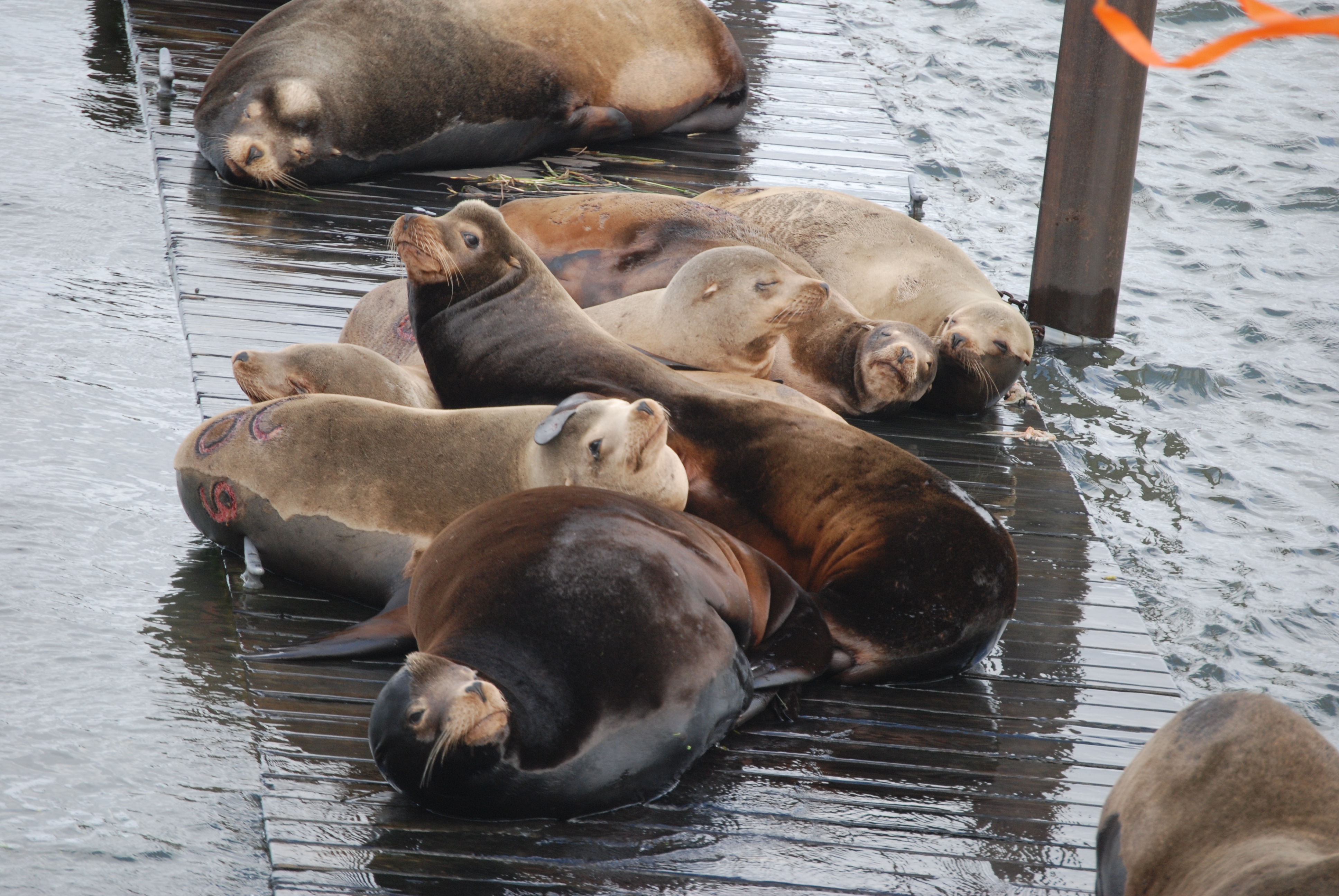
Some viewpoints need to go extinct, and the hate-speak espoused by Capt. Ron Malast in his opinion piece, “Let Steller sea lions go extinct,” is at the top of the list. So, the Steller sea lion population is starting to re-grow a little after the commercial seal trade, ruthless bounties and constant shooting as “competition” drove them, and just about every other pinniped species, to the brink of extinction.

The eastern pacific population of Steller sea lions may be up to 70,000 individuals now, but the human population of 7.2 billion grows by 350,000 per day. Let that sink in for a minute… 350,000 PER DAY!

350,000 is also the total number of all other great apes alive today—every chimpanzee, bonobo, gorilla and orangutan—combined. Why is that significant? Because scientifically speaking, that’s all we humans really are—just another species of ape, somewhere between chimps and gorillas. Homo sapiens share 98% of our DNA with Pan troglodytes, the chimpanzees.

But while seals and sea lions were evolving into self-sufficient sea mammals, adapting to pelagic life by perfecting the art of holding their breath for up to a half an hour and diving to depths of 600’ or more, human-types were busy developing a profoundly narcissistic sense of entitlement that took root early in Man’s prehistory. This feeling of privilege flourished as our species spread out and usurped every other species’ habitats and resources. From the mightiest bison of the plains to the flattest fish at the bottom of the ocean, we claimed the top of every food chain we could sink our teeth into.

The anthropogenic mass extinction following close on the heels of human’s surging population explosion already saw the end of the Steller sea cow and the Caribbean seal, both hunted to extinction in centuries past. Glibly calling for the extinction of wolves or Steller sea lions to snuff out the competition summons back an outdated attitude that should have long since been dead and buried.

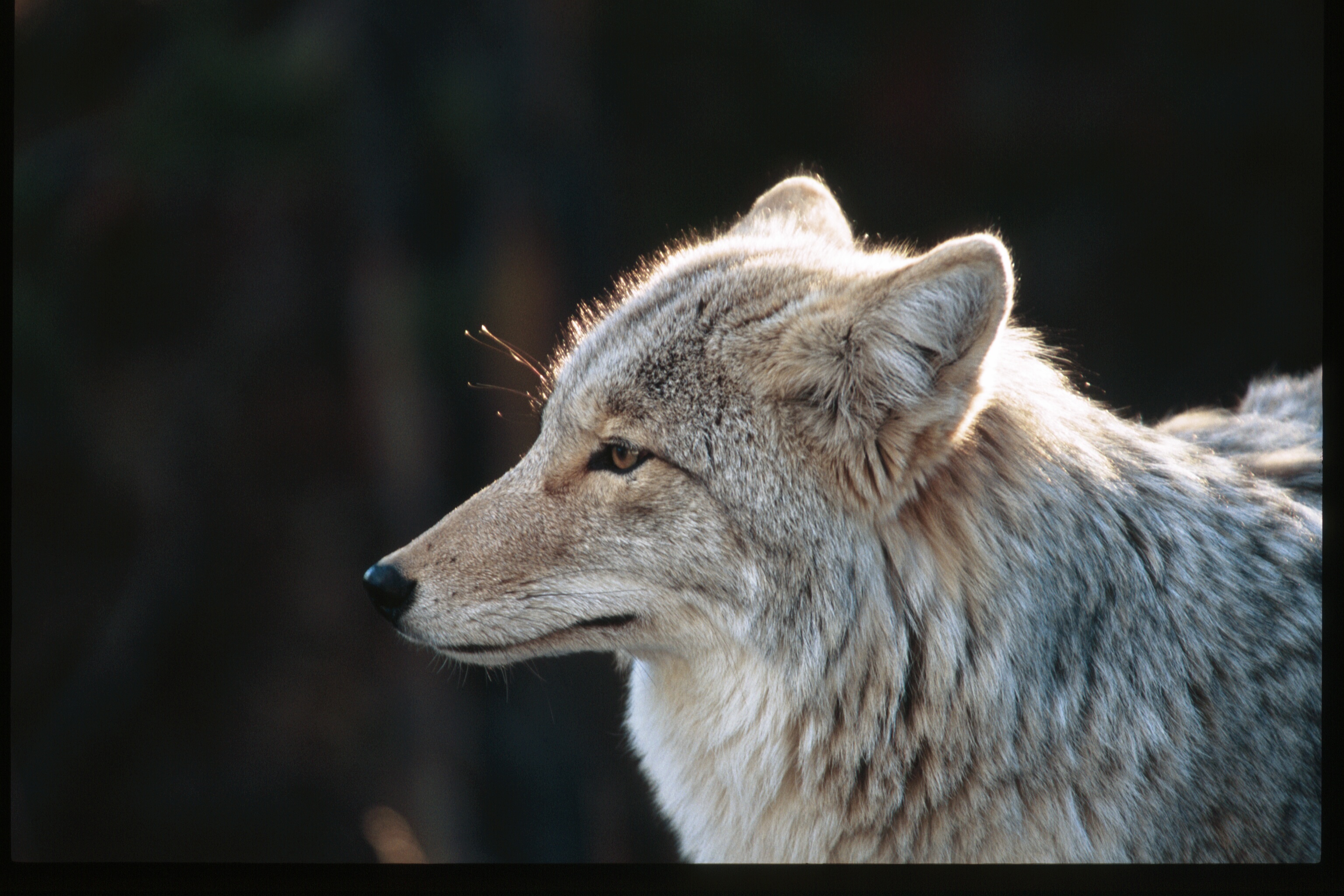
More Coyote Killing

Coyote hunt begins Wednesday

Published: Monday, January 19, 2015 12:49 PM MST

Central Montana’s Coyote Hunt is slated to begin on Jan. 21.  The contest was initiated, when hunters saw more coyotes in the field than deer and antelope during hunting season.  The hunt has been successful in the eyes of many ranchers who have commented on previous years’ hunts. For hunters in the field this year, many noticed the coyotes seemed to be running in packs even sooner, and for many in the field it seemed as if a dent had not even been made in  the population of predators.

The cost of being on the poster and helping to fund the contest is $100. All money raised goes to the hunters who bring in their entries. The contest will be run the same as last year with the drop offs at Don’s Store and the Sport Center in Lewistown.

During last year’s contest there were hunters entering coyotes from all over Central Montana’s trade area including Harlowton, Ryegate, Jordan, Winnett, Grass Range, Big Sandy, Winifred, Geraldine, Denton, Stanford, Geyser, Hobson, Moccasin, Utica, Moore, Judith Gap and Lewistown.

No hunter or trapper is able to enter more than 50 in the contest. Each entry is given a ticket and at the end of the hunt on April 1 tickets are drawn for the prize money. Holding the drawing in this manner lets the hunter who enters once have as good a chance at the prize money as the rest of the hunters, except a hunter who shoots more coyotes gets more entries into the contest.

Sponsors this year are PJG Motorsports, Custom Cut Meats, Fleet Supply, Judith MTN Meats, Utica Rod and Gun Club, Lewistown Plumbing and Repair, Doc’s OK Corral, Yogo Inn, Lewistown Taxidermy, Big Dry Saddlery, Ace Hardware, Hilger Meats, Advanced Electric, Lewistown Propane, Lewistown Honda-Polaris-Kawasaki, Sport Center and Don’s Store. To be listed or be anonymous as a sponsor contact Dale or Charlie Pfau at Don’s Store 538-9408 or John Tognetti  at the Sport Center 535-9308.
Slaughter the Earth...

A Response to Pro-Wolf Article by Chris Albert

by Rosemary Lowe
Veterinarian, Chris Albert, has written a thoughtful article. While people “can” live with wild non-humans like wolves, etc., thus far, our species’ history does not support the likelihood of our ever changing our Humanist perceptions about wild animals, because this species is, for the most part, afraid of Nature, and wild animals; and perhaps even jealous of them, and their “wildness.” We like to “domesticate” things, and we already have turned much of the Earth into a Domesticated Feed Lot.
Yes, some of us love, admire & try to protect  wild animals.  But, would most even consider what “living with” or “near them” would mean to our convenient- for- humans lifestyle? For instance, most humans will not tolerate, anywhere, a so-called “nuisance wild animal” for long, and we see evidence of that everywhere, with ranching, trapping & hunting.

—Wildlife Photography ©Jim Robertson

—Wildlife Photography ©Jim Robertson

We live outside Santa Fe, on a former over-grazed ranch.The rancher trapped/poisoned coyotes, bobcat, prairie dogs, etc. Now, houses of about an acre and a half are here, and the wildlife here probably do better than before. Many of us in this community of about 5,000  are pleased  having the wildlife around: I have seen coyote in the day time, and there are some bobcat, quail, and an occasional pronghorn around. However, our AHA newsletter often has to remind residents that our covenants reflect an “appreciation”  of wildlife here, because invariably, there are those here who poison coyote, blaming them for every lost cat and dog, and they do not want wild animals near their kids.
People like to think that wildlife are “out there, somewhere,” but in reality, they would not tolerate any perceived inconvenience (or alleged harm) they might cause.
Human society was designed for humans, not nature, so nature must be pushed back, and that means wildlife & wild places.
Most of us on this blog think this is wrong. But, our human activities here and around the word prove that humans will not “co-exist” with wild animals, because we never really did. It was always an adversarial relationship, and it is not getting better, especially now with human population exploding: going on 7+ billion, to 8, 9 or more billion. What will be left for wildlife? Where will they live? Most wild animal populations are in severe decline around the world.
 Will caring humans (not the majority, I’m afraid) make the hard sacrifices necessary to make more room for surviving wildlife, especially in a world now affected by increasing climate change? Is our species capable of shedding our environmentally-destructive Humanist Ideologies in order to save what is left of Nature?
Rosemary Lowe
image
EARTH for Animals

Environmentalists Against Ranching, Trapping and Hunting

Pope Potpourri: Don’t Breed Like Rabbits/Will the Pope Go Vegan?

http://www.cbsnews.com/news/pope-francis-walks-back-remark-about-catholics-breeding-like-rabbits/

Pope change his mind on breeding “like rabbits”?

Pope Francis leads his Wednesday general audience in Paul VI hall at the Vatican, Jan. 21, 2015. REUTERS

ROME — During his weekly general audience in St. Peter’s Square, Pope Francis sought Wednesday to clarify remarks he made earlier in the week which suggested Catholics should limit the number of children they have, if they can’t afford to take care of them properly.

Aboard the papal plane from Manila to Rome on Monday, the Pope spoke of his disapproval of a woman who was expecting her eighth child.

“Does she want to leave seven orphans?” asked the pontiff, wondering aloud whether she was trying to tempt god by undergoing an eighth birth by cesarean section.

Using the colorful language that has become his hallmark, the Pope said being a good Catholic did not mean people should breed “like rabbits,” and added that there were many church-approved ways to limit births without resourcing to contraceptives, which are banned by the Catholic Church.

Wednesday, he seemed to pull back from that statement. Speaking of his recent trip to the Philippines, where he presided over the largest mass in history, he said “it gives consolation and hope to see so many numerous families who receive children as a real gift of God. They know that every child is a benediction.”

He called “simplistic” the belief that large families were the cause of poverty, blaming it instead on an unjust economic system. “We can all say that the principal cause of poverty is an economic system that has removed the person from the center, and put the god of money there instead.”

Mons. Anthony Figueiredo, a theologian and Director of the North American Pontifical College in Rome, said the two statements are not contradictory.

“When the Pope speaks on the plane, he is speaking as a pastor to ordinary people,” said Figueiredo, who is a CBS News consultant. “When he comes back, he wants to speak as Pope.”

The Monsignor said that while some Popes have put doctrine first, Francis puts the person first.

“It’s a risky business, there is no doubt about it; because when you begin with the person, everyone has their own way of hearing it.”

Putting Pope Francis squarely into any category can be difficult.

Speaking to reporters during Francis’ trip to the Philippines, Archbishop of Manila Luis Antonio Tagle said that when he’s asked whether the pope is a liberal or a conservative, he responds simply: “he is who he is.”

__________________________________________

Will the Pope Go Vegan? | Posted January 20, 2015 | 11:35 AM

I jest not. Never having been one to adhere to any organized religion, in fact I have an utter contempt for them, I find myself nonetheless more than a little happy to hear Pope Francis has made global climate change a top concern. According to the Associated Press

Patricia Randolph’s Madravenspeak: Wolves’ reprieve short-lived if Ribble bill succeeds

dvoight09's avatarWisconsin Wildlife Ethic-Vote Our Wildlife

wolf jan 2015

“I am truly concerned by the fact the DNR is becoming a fostering institution for psychopaths. The DNR in the state of Wisconsin is a complete shame.” ~ Maria Horn, citizen communication to Wisconsin Department of Natural Resources

As wolf biologists breathe a sigh of relief with the recent federal court-ordered merciful end to destruction of wolves in the Great Lakes region, congressional Reps. Reid Ribble, R-Wis., Cynthia Lummis, R-Wyo., Collin Peterson, D-Minn., and Dan Benishek, R-Mich. are preparing legislation to permanently remove protections for wolves in Wisconsin, Michigan, Minnesota and Wyoming. Wolves were delisted three years ago in another legislative maneuver in defiance of Endangered Species Act requirements.

This is wolves’ last stand.

To protect wolves, please contact your federal representative and senator now (202-224-3121) to urge them NOT to support legislation or riders that:

• Permanently delist gray wolves in the Great Lakes region (NO to the Ribble…

View original post 780 more words

We can live with wolves in the wild

http://www.duluthnewstribune.com/opinion/national-view/3660405-response-we-can-live-wolves-wild

by  Chris Albert

As much as I appreciated Sandy Updyke’s Jan. 14 column headlined, “City people don’t understand wolves” — it was refreshing to read something so thoughtful on this topic — I did have some disagreements.

As a veterinarian, I dispute her claim that foothold traps are “harmless.” Ischemia, or the lack of blood supply, is extremely painful. Depending on how long an animal is caught in a trap and depending on the trap’s tension, a foot may be damaged beyond repair. A rubber band around your finger for long enough would produce the same kind of damage (don’t try it).

Updyke also didn’t address the fear that animals face when exposed and unable to retreat or the sometimes-brutal methods of dispatch. Not to mention the fragmentation that happens to a family when a member of a social species like a wolf is taken. Traps are most certainly not harmless.

As for dogs and wolves, by far the most conflict occurs when hunting dogs are intentionally put in harm’s way. I don’t live in wolf country but have friends with pets who do. There are sensible guidelines that keep dogs safe: Don’t leave dogs outside alone, check an area with lights before sending a dog out and don’t leave out food or other attractants.

I wholeheartedly concurred that wolves are not deities or villains and that their hunting strategy is not pretty. Though why does the latter even matter? I even concur that people need to be able to shoot a wolf if it is imminently harming them or their animal.

That doesn’t seem to be what happens, though. It seems that people filled with hatred and a desire to inflict the most harm possible are turned loose on wolves to maximize destruction.

Wolf advisory boards have precious few advocates for wolves. The impact of killing a single wolf on that wolf’s family rarely if ever is considered by such boards.

We can live with wolves and other large carnivores. We can have them safely in our forests. Why would we want to? Because we will be much richer for it. It’s not only city folk who feel this way; there are plenty of people living where wolves do who want wolves free from hunting and trapping and killed only when it is truly unavoidable.

Chris Albert of Lebanon Junction, Ky., is a doctor of veterinary medicine.

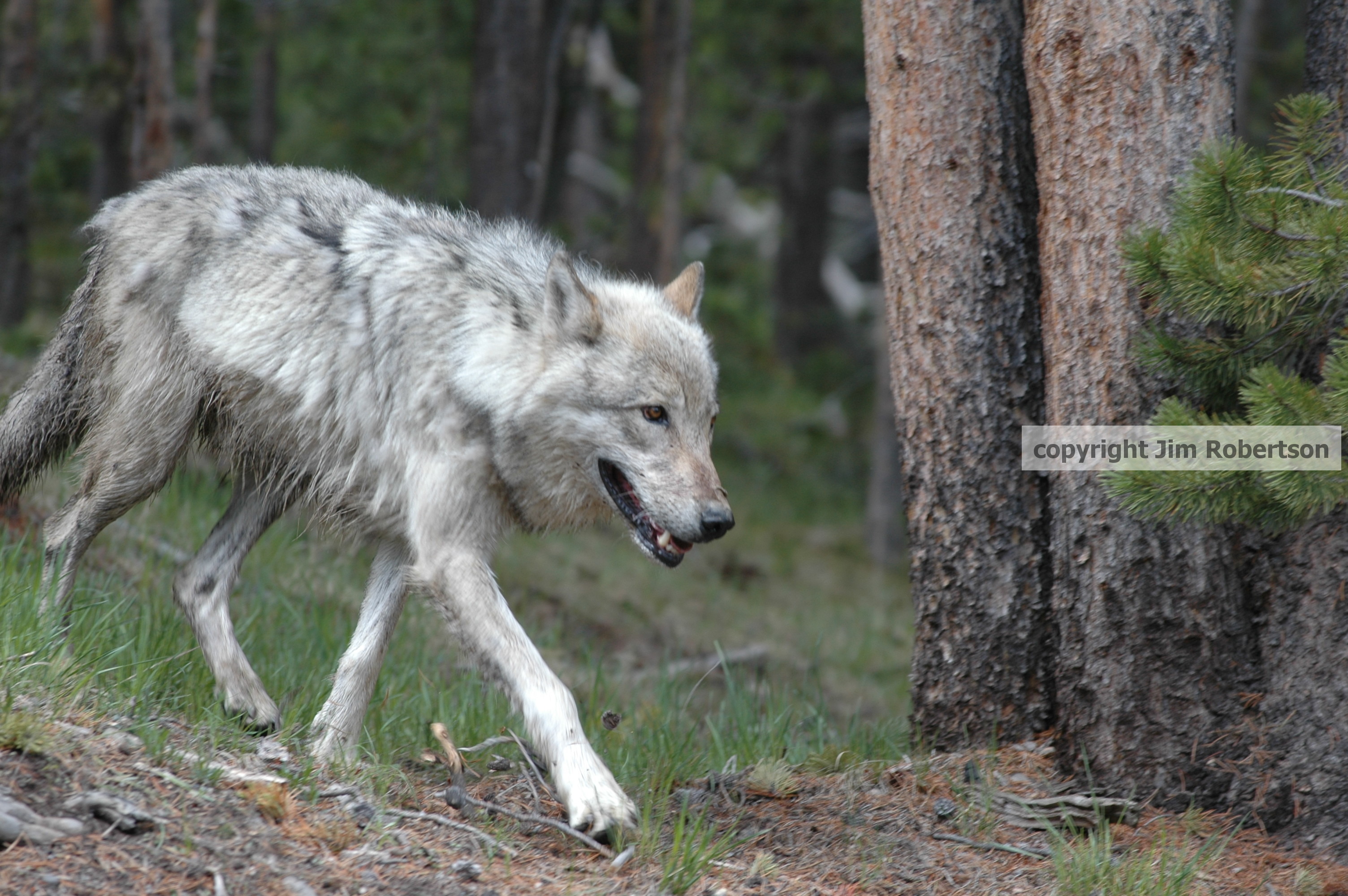
copyrighted Hayden wolf walking

Some people need to go extinct…

…like the one who wrote the following hateful opinion piece:

http://www.chinookobserver.com/co/outdoors/20150120/fish-feathers-let-steller-sea-lions-go-extinct

Let Steller sea lions go extinct

By Capt. Ron Malast
January 20, 2015 1:19PM

Steller sea lions may be coming off “threatened” list, raising possibility for more proactive management

Steller sea lions have been in the news a lot lately. Although recent articles expound around the virtues of bringing back endangered species such as sea lions from close to extinction, the Steller sea lion is not one of the more popular species enamored by certain portions of society.

Not only do Stellers prey on all types of salmon but they also have been found to take 85 percent of the sturgeon that fall to depredation.

Remember all the flounder we used to catch in the river during sturgeon season 8-10 years ago? Well, they are a thing of the past, thanks to Mr. Steller

The Washington Department of Fish & Wildlife has recommended listing tufted puffins on the state’s endangered species list and removing Steller sea lions from the state’s threatened species list, which may lead to a lethal means of reducing Steller numbers. Written comments can be submitted (wdfw.wa.gov/commission) through Jan. 23. A public hearing is scheduled Feb. 6 and 7 at the WDFW meeting.

Steller sea lions are the larger of the two sea lion species found in Washington and have been protected by the state as a threatened species since 1993. The species received federal protection under the Endangered Species Act in 1990 and the National Marine Fisheries delisted the eastern population ranging from northeast Alaska to northern California in December 2013. The population in that area has grown from 18,000 in 1979 to 70,000 in 2010. [Meanwhile, the human population grows by 200,000 per DAY!]

More than 1,500 Steller sea lions have been counted in Washington in recent years, compared to approximately 300 spotted during surveys in the early 1990s.

The millions of dollars that are spent trying to replenish salmon is just money going down the drain when you have a predator such as Steller sea lions in the Columbia River. The methods used to protect the “lions” are counter-productive to what we are trying to accomplish. In nature, sometimes it is best to leave things be as they may and not try to recover a particular species, as in this case.

Another case in point is the wolf, where God only knows how many millions have been spent to re-introduce it, and then find out that it has devastated deer and elk herds across the western U.S. Much of this is being benighted by the “dogooders,” the feds and the scientific community, but it’s a fact. In the near future, we will be trying to rebuild the lost elk and deer herds having been lost to those cute little wolves.

When is this world going to realize that not everything needs to be saved?

littleboyc09

Dog guards hunter’s body in wildlife refuge duck blind

http://www.komonews.com/news/local/Dog-guards-hunters-body-in-wildlife-refuge-duck-blind-289326711.html

LONGVIEW, Wash. (AP) – A dog protecting its owner wouldn’t let a manager at the Ridgefield National Wildlife Refuge approach the duck blind where the hunter had fatally collapsed.

The Clark County sheriff’s office says Ridgefield police removed the aggressive dog using a catch pole Tuesday evening and medics confirmed the 54-year-old man was dead, presumably of natural causes.

The Columbian reports the man went hunting at 5 a.m. but didn’t check out at dusk, so the manager went to check on him. A duck he had shot was inside the blind with him.

The dog was held for a family member to retrieve.

imagesQB1DEJIT

Opinion: High Noon for the Gray Wolf

The return of these animals to the homes of their ancestors — however fleeting — was a result of their 40-year protection under the Endangered Species Act.

OR-7, or “Journey,” as schoolchildren named the first wolf, had been born to the Imnaha pack, the first one in Oregon for many decades. When he wandered south, his brother, OR-9, wandered east. Shortly after he crossed into Idaho (where wolves are not protected), he was shot dead. OR-7 lived on, after his repeated incursions into California (where wolves are protected), to sire a litter of pups just north of the state line. He became the subject of a documentary — in California, even a wolf can be a star.

The story of the Grand Canyon wolf, though, may be over: Three days after Christmas, it appears, she was shot and killed in Utah by a man media outlets have called a “coyote hunter.” (A DNA test is pending.)

For almost two centuries, American gray wolves, vilified in fact as well as fiction, were the victims of vicious government extermination programs. By the time the Endangered Species Act was passed, in 1973, only a few hundred of these once-great predators were left in the lower 48 states. After numerous generations of people dedicated to killing wolves on the North American continent, one generation devoted itself to letting wolves live. The animals’ number has now risen to almost 5,500, thanks to their legal protection, but they still occupy less than 5 percent of their ancient home range.

Since 1995, the act has guided efforts to raise wolves in captivity, release them, and follow them in the wild. Twenty years ago this month, the first gray wolves were reintroduced to Yellowstone National Park.

But this fragile progress has been undermined. Since 2011, the federal government has moved to remove federal protection for gray wolves in the Northern Rocky Mountains (Idaho, Montana and Wyoming) and in the western Great Lakes (Minnesota, Wisconsin and Michigan), the two population centers. Management of the species was turned over to these states, which responded with a zeal that looks like blood lust.

Relying on the greatly exaggerated excuse that wolves threaten cattle and sheep, the states opened their doors to the killing of wolves. (In some states, bait can be used to lure the animals to their deaths; in Montana, private landowners can each kill 100 wolves each year; in Wisconsin, up to six hunting dogs on a single wolf is considered fair play.) Legions of wolf killers rose to the challenge, and the toll has been devastating: In just three and a half years, at least 3,500 wolves have been mowed down.

There’s been an outcry from conservationists, ecologists and people who simply like wolves, but this has not stopped the killers. Some say wolves are a threat to their livestock investments (despite the existence of generous rancher-compensation programs in all wolf states save Alaska); others invoke fear of wolves; still others appear to revel in killing. Online, you can find pictures of wolf carcasses held up proudly as trophies and men boasting of running over wolves with their cars. Judges have started to step in. In September, a federal court decided that wolf management in Wyoming — which had allowed people to kill as many wolves as they wanted, throughout 84 percent of the state — should be returned to the federal government. In December, also in response to a lawsuit, another federal court reinstated protections for wolves in the western Great Lakes. These decisions should make clear that the states alone simply can’t be entrusted with the future of our wolves.

In Washington, the threats persist. The Fish and Wildlife Service is considering a proposal that would strip federal protection from almost all gray wolves in the lower 48 states, not just the ones in the Rockies and the Midwest. Meanwhile, right-wing Republicans in the new Congress are champing at the bit to remove the wolves from protection under the act — politics trumping science.

More: http://www.nytimes.com/2015/01/19/opinion/high-noon-for-the-gray-wolf.html?_r=0

copyrighted Hayden wolf in lodgepoles